
Xiaoyubot's Qiao Zhongliang: three proprietary technologies as the foundationfirst embodied-intelligence welding robot starts at 169,800 yuan
AI Translation Notice: This article was translated with the assistance of AI and is for reference only. In case of any discrepancy, the original Chinese text shall prevail.
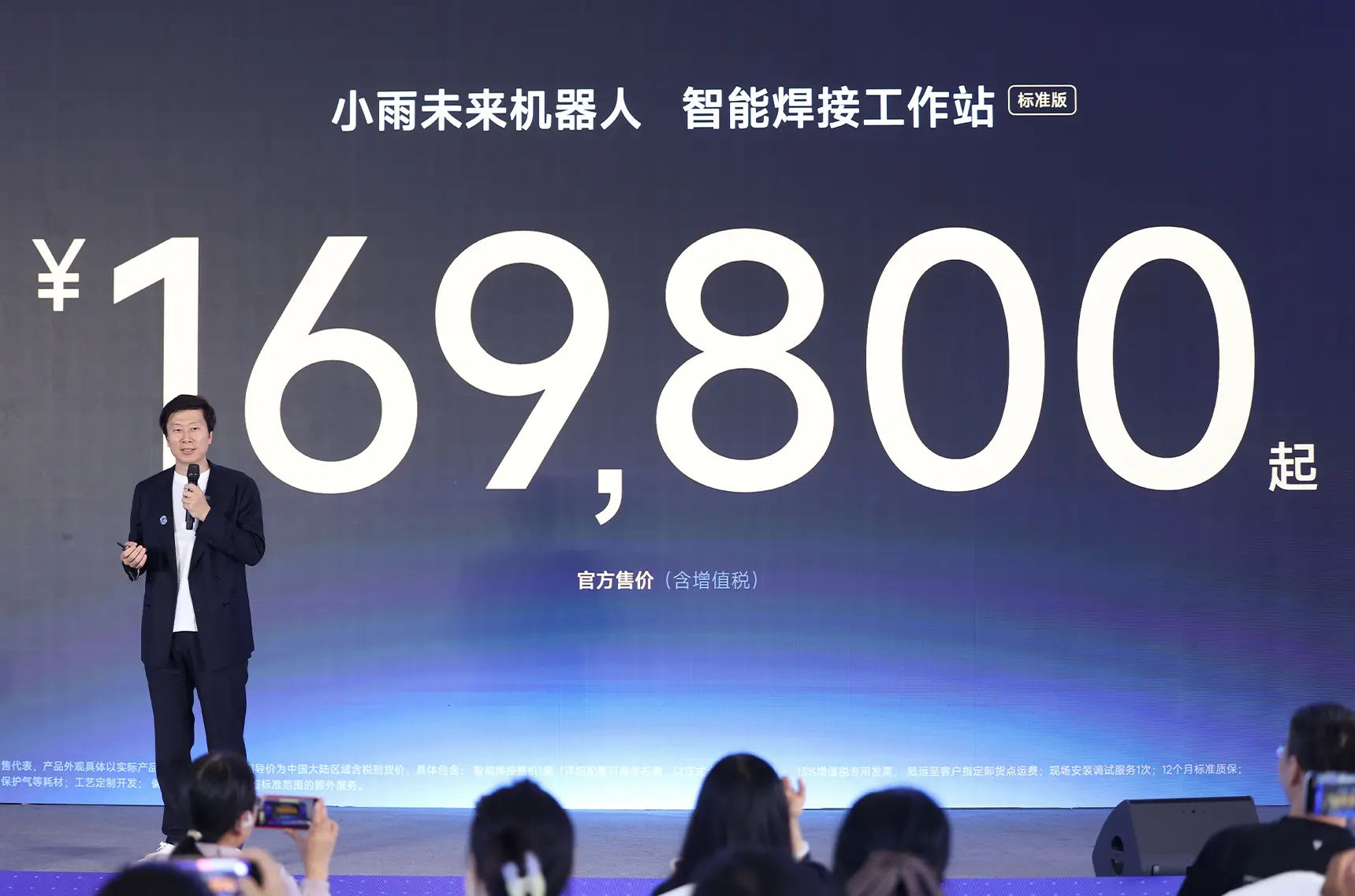
On July 2, the 2026 Global Digital Economy Conference opened at the China National Convention Center in Beijing. In the conference's "debut showcase" segment, Beijing Xiaoyubot Technology Co., Ltd. officially released the industry's first industrial embodied-intelligence welding robot, the "Xiaoyubot Future Robot," with a standard version starting at 169,800 yuan.
Xiaoyubot founder and CEO Qiao Zhongliang appeared with the product and unveiled the three underlying technologies behind it: the Xiaoyubot Runwu world model, the Xiaoyubot Xirang hardware platform, and the positioning pen. This series of innovations has already been put into use in more than ten frontline factories, covering scenarios such as building steel structures and shipbuilding. As the debut work of Xiaoyubot' three years of entrepreneurship, it not only brings the century-old welding industry into the embodied-intelligence era, but also marks a solid step forward on the industrial-deployment route of embodied intelligence.
Three underlying technologies build the infrastructure of industrial embodied intelligence
If the Xiaoyubot Future Robot is the protagonist of this launch, then the three proprietary underlying technologies — the Xiaoyubot Runwu world model, the Xiaoyubot Xirang hardware platform, and the positioning pen — are the foundation laid before the protagonist takes the stage. From physical AI models, the hardware platform and human-machine collaboration respectively, the three technologies build a complete technical foundation for industrial embodied intelligence.
"The Runwu world model gives robots 'industrial intuition' for the first time," Qiao Zhongliang explained. The model is a 4D world model developed in-house by Xiaoyubot; it can deduce how the physical environment will evolve after an action is executed, and thus find in advance the optimal control path that satisfies the constraints. The model has not only accumulated over 100,000 hours of multimodal data from real industrial scenarios, but has also drilled relentlessly into the extremely complex scenario of welding, connecting the closed loop of training, online data return and rapid real-machine deployment of the model. "The ultimate in a single point is the gateway to the general-purpose," Qiao said — every time a scenario is broken through, it moves one step closer to "One Brain, Multiple Forms."
Over the past thirty years, robot manufacturers have generally faced infrastructure pain points such as insufficient edge-side compute, loose whole-machine architecture and unstable communication. The Xiaoyubot Xirang hardware platform aims to reshape the industry foundation, unify the underlying interfaces and communication protocols, and break through the software-hardware barriers between multi-form robots, so that the robot's "brain" can truly achieve cross-form generality — in the future, whether robotic arm, quadruped or humanoid, as long as it connects to the Xirang platform, the most powerful brain can take over.
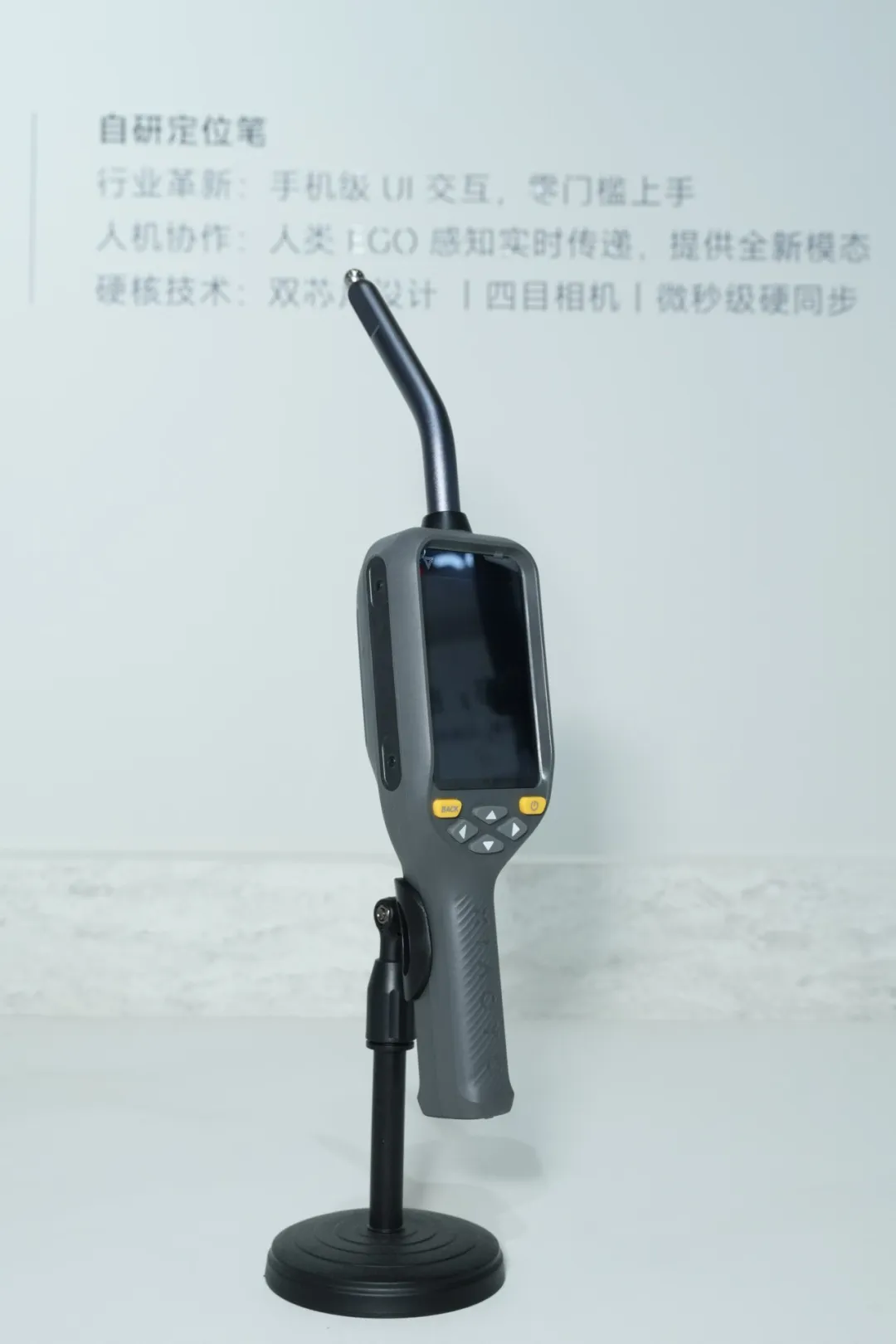
Compared with the breakthroughs in software and hardware, the innovation in human-machine collaboration drew the most attention on site. Qiao Zhongliang explained that, given the particularity of the industrial environment and the complexity of tasks, language is inherently at a disadvantage as a way of conveying human intent to embodied intelligence. Drawing inspiration from the computer mouse, Xiaoyubot created a positioning pen that can "point and hit" in three-dimensional space. The positioning pen can capture spatial information and transmit it to the robot in real time, and adopts a phone-grade UI, allowing a novice worker who has never touched a robot to go on the job directly in 3 minutes, lowering the usage threshold almost to zero.
The Xiaoyubot Future Robot: hardware maxed out, starting at 169,800 yuan
Integrating all three technologies into one, Xiaoyubot turned in its first answer sheet — the Xiaoyubot Future Robot. Positioned as the industry's first industrial embodied-intelligence welding robot, it maxes out the configuration across the three core links of robotic arm, vision and compute, forming a complete industrial welding embodied-intelligence system.
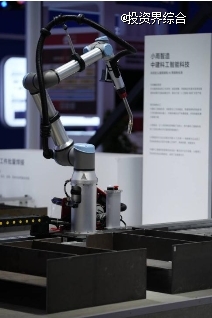
According to the company, the robotic arm uses Denmark's Universal Robots, with an absolute precision of about 0.5 mm; paired with industry-leading thermal-compensation technology, it perfectly suits welding scenarios. This model carries Germany's TÜV Rheinland safety certification and features all-joint torque sensing and millisecond-level instant stop. Qiao Zhongliang said the Xiaoyubot Future Robot can be deployed rapidly in 4 hours and supports multiple arm spans: a short arm span can be used in cramped ship cabins, and a long arm span can be paired for building steel structures. On the vision side, the Xiaoyubot Future Robot uses Mech-Mind's welding-dedicated 3D camera across the board. Paired with the Xiaoyubot Runwu multimodal perception algorithm, it stably outputs sub-millimeter point clouds, covering common welding scenarios such as reflective metal surfaces, V-shaped grooves and multi-layer weld seams.
Notably, the Xiaoyubot Future Robot raises the compute level of the welding industry directly to the autonomous-driving grade. It not only carries the NVIDIA Orin platform; Qiao Zhongliang also announced at the launch a strategic partnership with D-Robotics, and it will in the future carry the domestically made Sunrise S600 flagship compute platform. That platform uses an 18-core Arm Cortex-A78AE architecture with 560 TOPS of AI compute, paired with a Mali-G78AE GPU core and 220 GFLOPS of single-precision floating-point performance, mainly handling real-time multi-camera point-cloud stitching and 4D world-model inference.
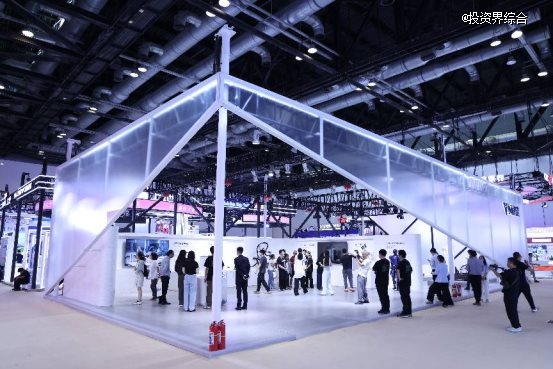
Meanwhile, at the Beijing·Essen Welding & Cutting Fair held in Shenzhen the same day, China Construction Steel Structure — a core steel-structure enterprise under China State Construction — also exhibited a highly flexible intelligent welding solution jointly developed with Xiaoyubot. Qiao Zhongliang revealed that as of the launch date, the Xiaoyubot Future Robot had already been deployed in more than ten frontline factories, covering fields such as shipbuilding, building steel structures and bridges, proving the product's value through real work.
The launch revealed that the standard version of the Xiaoyubot Future Robot intelligent welding workstation starts at 169,800 yuan. Qiao Zhongliang said that, measured against the all-in cost of an experienced welder, this price allows the Xiaoyubot Future Robot to recoup its cost faster than comparable products in the industry.
Creating the embodiment dividend, becoming a full-stack industrial embodied-intelligence company
It is understood that humanoid spectacle and industrial deployment are the two mainstream routes of embodied intelligence today. Xiaoyubot clearly makes industrial scenarios its priority direction and positions itself as a "full-stack industrial embodied-intelligence company." Qiao Zhongliang said at the launch: "Industrial scenarios are relatively controllable, and enterprises are willing to pay for core pain points; they are inherently the best testing ground for general-purpose embodied intelligence, and most likely to give birth to a super hit product of embodied intelligence."
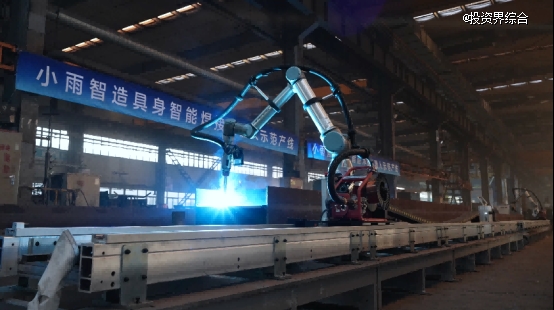
There were multiple considerations in choosing welding as the first stop. First, welders — known as "industrial tailors" — are one of the trades with the largest headcount in the Ministry of Human Resources and Social Security's statistics, which means a huge market capacity. At the same time, the average age of welders has reached about 45, with a shortage of more than 3 million. "Welding scenarios have harsh environments — high temperature, dust, noise, arc light — and young people are voting with their feet," Qiao said, adding that liberating humans from harsh working environments is a cause of humanistic justice.
Qiao Zhongliang explained that Xiaoyubot hopes to create an "embodiment dividend," building a large-scale, silicon-based labor force to take on work that humans are unwilling to do, cannot do well, or cannot do at all — thereby strengthening the moat of Chinese manufacturing and preventing the supply chain from flowing out under cost-driven pressure.
From Xiaoyubot' "debut showcase," one can see that AI can not only make waves in the virtual world, but should also unleash real productivity in real workshops full of steel and welding sparks. As Qiao Zhongliang put it: "Embodied intelligence must land in real workshops and drive real production lines — only then can the AI era be said to have truly arrived."